BUYING GUIDES
How to Read BEDFORGE Listing Photos and Item Codes
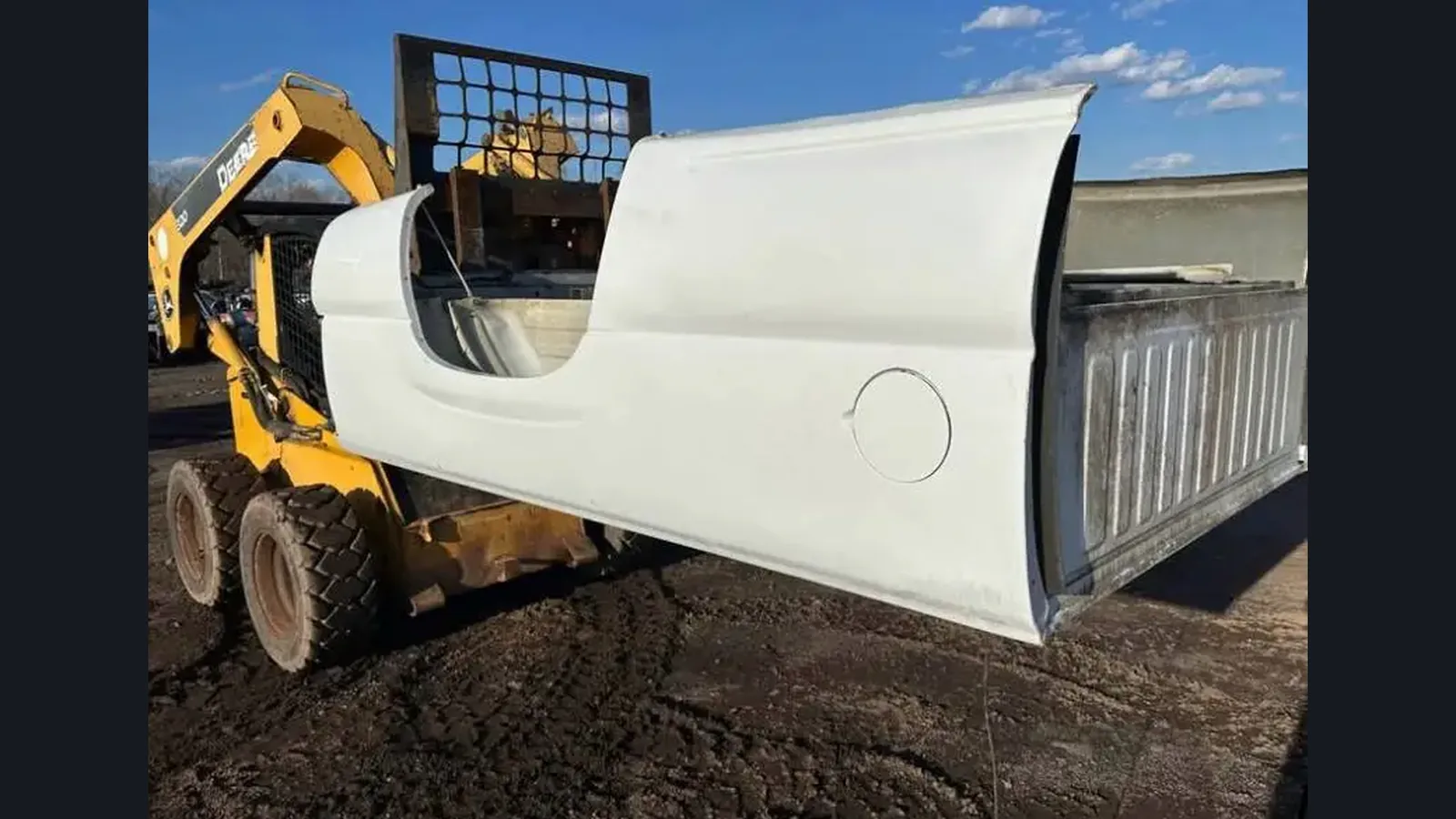
Every BEDFORGE listing is built around real photos of the item and an item code that starts with BF-. The photos show the side, the rear, the floor and the underside. The code ties the photos to one specific bed so you, and we, know exactly what you are talking about when you ask about fitment or freight.
What is an item code and why does it matter?
An item code is the label for one item. It starts with BF- and it appears on the listing. If you send us a message that says “the grey Ford bed” we have to guess. If you send BF-4BA336E1, we are looking at one item, the same photos you are, and the same listing details.
Use the code for everything: fitment questions, freight quotes, requests for extra photos and returns. Our returns page asks for the item code too.
What shots should a listing include?
A good bed listing has the same handful of views. The Ford bed photos on this page (item BF-4BA336E1) show four of them; here is what each one is for.
| View | What it shows you | What to look for |
|---|---|---|
| Side | Body line, side wall, wheel well | Dents, waves, paint match |
| Rear three-quarter | Tail light opening, tailgate end | Cracks, missing housings |
| Floor from above | Floor ribs and seams | Pitting, bubbles, cracks |
| Tailgate end | Rear corners and inner walls | Corner cracks, rust |
| Underside | Crossmembers, mounts | Staining, flaking, bends |
If a view is missing, ask for it. The underside is the most skipped and the most useful.
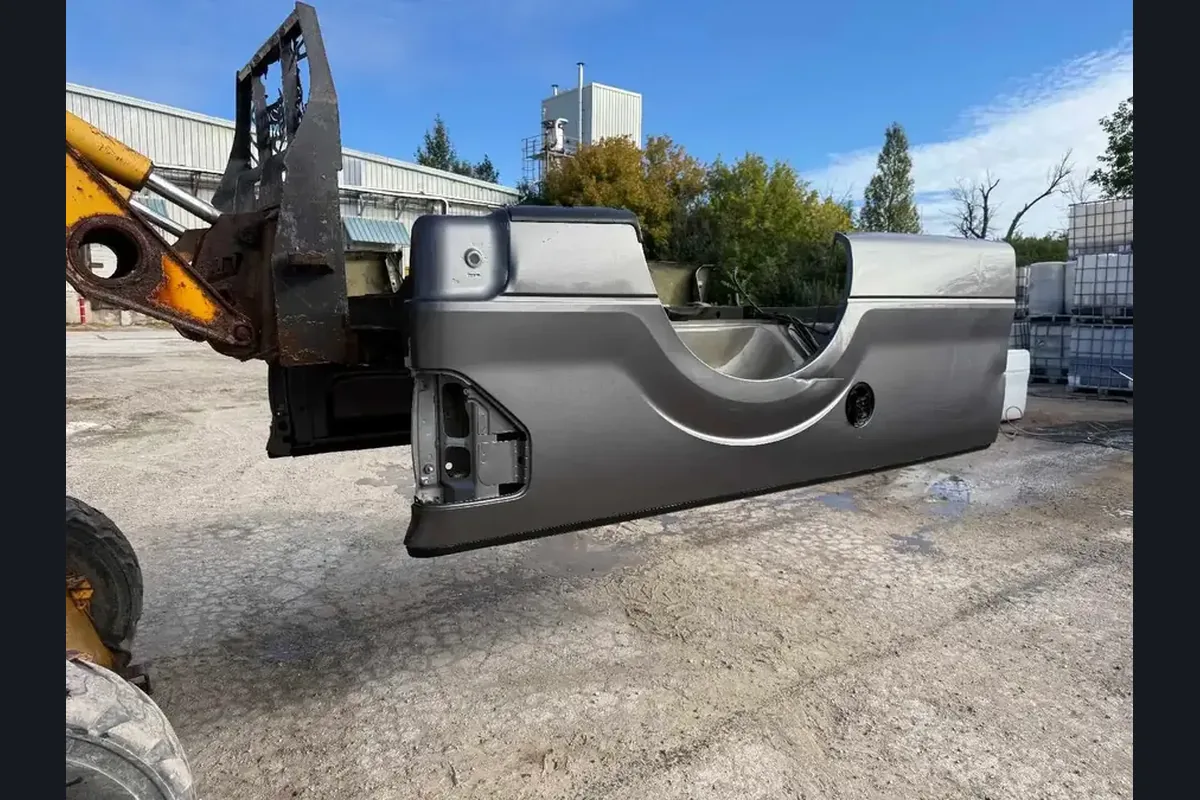 A rear three-quarter shot shows the tail light opening and the corner where the side wall meets the rear panel.
How do you read a floor photo?
Look from the front of the bed to the back along the ribs. You want even surfaces, with no ripples, no deep pits and no bubbles in the paint along the seams. Look for any place the pattern changes. A ripple across the ribs usually means impact.
Then compare left and right. A bed is symmetrical, so anything that is not mirrored on both sides is worth a question. Dirt and dust are not damage, so look through them to the metal.
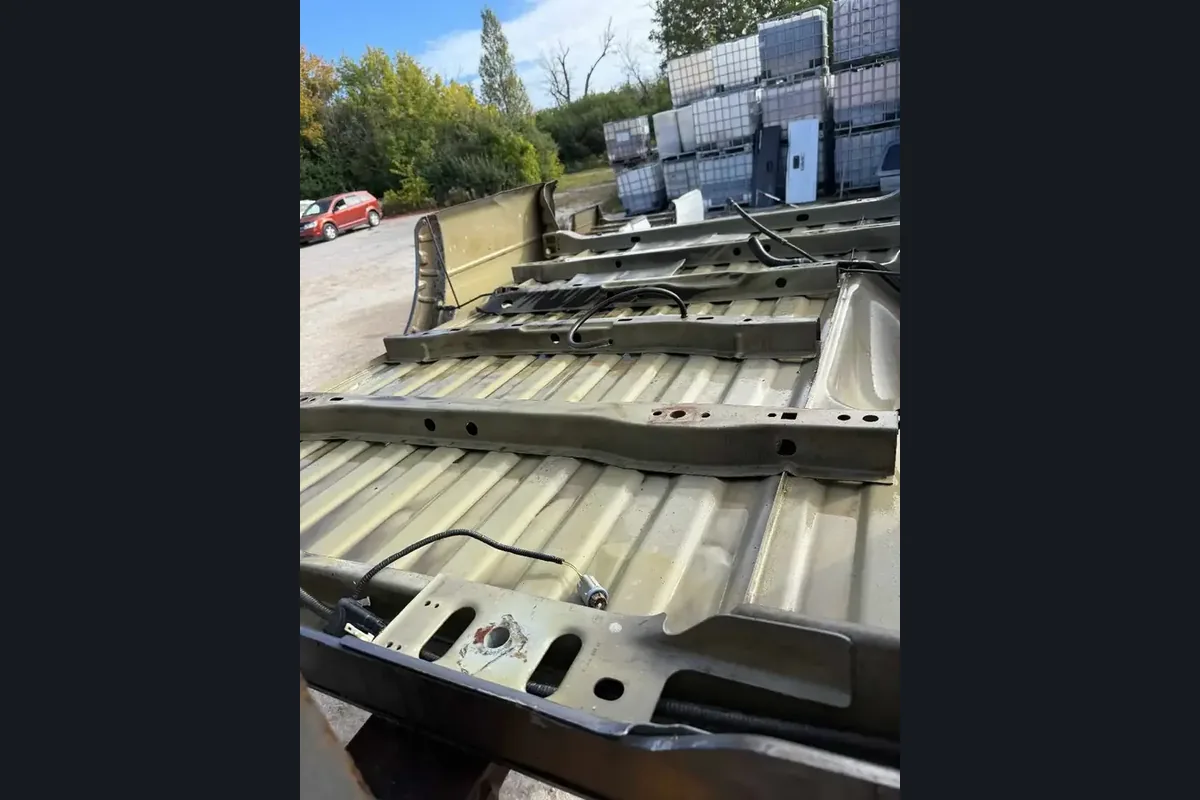 A straight-down floor view: ribs, seams and the wiring run are all in one frame.
What does the title and year range tell you?
The listing title carries the make, the year range, the bed length and sometimes the color. The year range is a guide to which trucks the bed came from or is expected to fit. The bed length, written as 6’6”, 6.5 ft or 6.6 ft, tells you which class of bed it is. Different people write the same length in different ways, so compare against the length class of your truck and not the exact spelling.
None of that guarantees fitment. Trucks change inside a year range, and a bed from one truck is not always a match for another. That is why we ask for your VIN. Our fitment guide covers what we compare.
What do the other listing details tell you?
Beside the photos, a listing gives you the make, the years the bed is expected to fit, the bed length and sometimes the color. Treat each as a filter, not a verdict.
- Make and years narrow the list to beds from trucks like yours.
- Bed length puts the bed in a class: short, standard or long.
- Color matters if you are keeping the paint, and matters less if you are painting.
- Item code is how you refer to this one bed when you write to us.
Two listings with the same make, years and length can still differ in tail light style, damage and paint. That is why the photos matter as much as the title, and why it is worth comparing two or three before you ask.
Why does the background look like a yard?
Because that is where beds are photographed. A bed weighs a lot and moves on a forklift or a skid steer, so you see the equipment in the shot. Look at the bed, not the machine.
If you see a bed photographed in snow or rain, that is just the day it was taken.
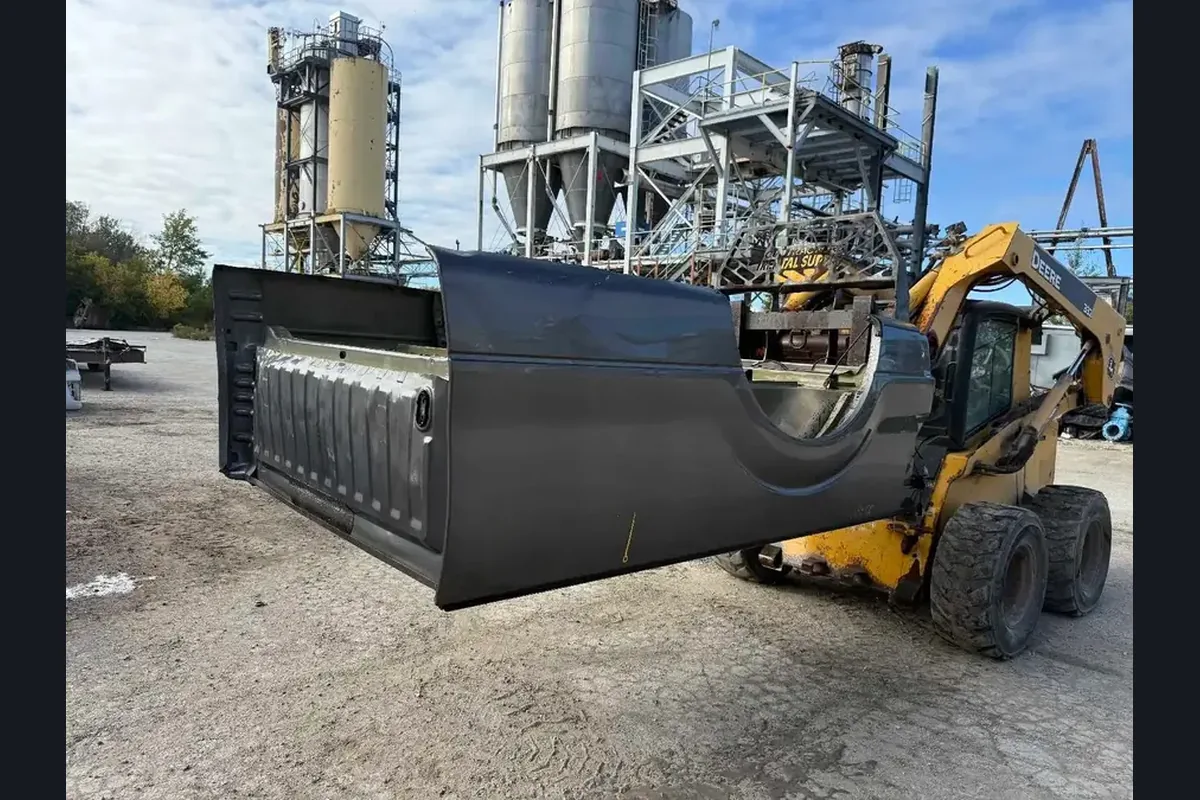 The tailgate end shows the rear corners and the inner walls, which tell you how hard the bed worked.
What can a photo not tell you?
Photos show surfaces. They do not show how flat a bed sits on your frame, whether a harness plug matches yours, or whether a faint wave in a rail is a problem. They can also hide a small rust spot behind a shadow. If something in a photo looks odd, say which photo and which corner, and ask. A specific question gets a specific answer, and it often turns up a detail the listing never mentioned.
If you are comparing two beds, line the photos up view by view: floor against floor, underside against underside. It is the fastest way to see which one is cleaner.
How do you send a good question?
A message with these four things is easy to answer:
- The item code.
- Your VIN.
- Your delivery address, so we can price freight.
- The photo or area you want to know more about.